

Can Upper Cervical Adjustments Help Migraines and Tension Headaches? A Denver Guide to Conservative Headache Care
Exploring the Unique Causes of Headaches in Denver and How Chiropractic Care Provides Relief
Recurring headaches can disrupt nearly every part of your life. Whether you’re dealing with frequent tension headaches after long workdays or migraines that interfere with family time, sleep, and productivity, finding effective relief often becomes a priority.
Many people manage headaches with over-the-counter medications or prescription treatments. While these approaches may help reduce symptoms, they don’t always address underlying factors that could be contributing to recurring discomfort. For some individuals, neck dysfunction may play a role in certain types of headaches, particularly those associated with poor posture, previous injuries, or restricted movement in the cervical spine.
This is one reason many people search for an upper cervical chiropractor in Denver. Upper cervical chiropractic care focuses on evaluating and treating the upper portion of the neck using gentle, precise techniques designed to improve spinal function. Although chiropractic care is not a cure for migraines, it may be part of a comprehensive treatment plan for some patients whose headaches are associated with neck dysfunction.
In this article, we’ll explain how the upper cervical spine relates to headaches, what current evidence suggests, and when it may be appropriate to schedule an evaluation with an upper cervical chiropractor in Denver.
What Is the Upper Cervical Spine?
The upper cervical spine includes the first two vertebrae:
- Atlas (C1)
- Axis (C2)
These vertebrae support the head, allow a large portion of the neck’s movement, and protect the brainstem.
The joints, muscles, ligaments, and nerves surrounding this region work together to maintain balance, posture, and normal movement.
When movement in the upper cervical spine becomes restricted or dysfunctional, nearby muscles may compensate by becoming tight or overactive. In some individuals, this altered mechanics may contribute to neck discomfort and certain headache patterns.
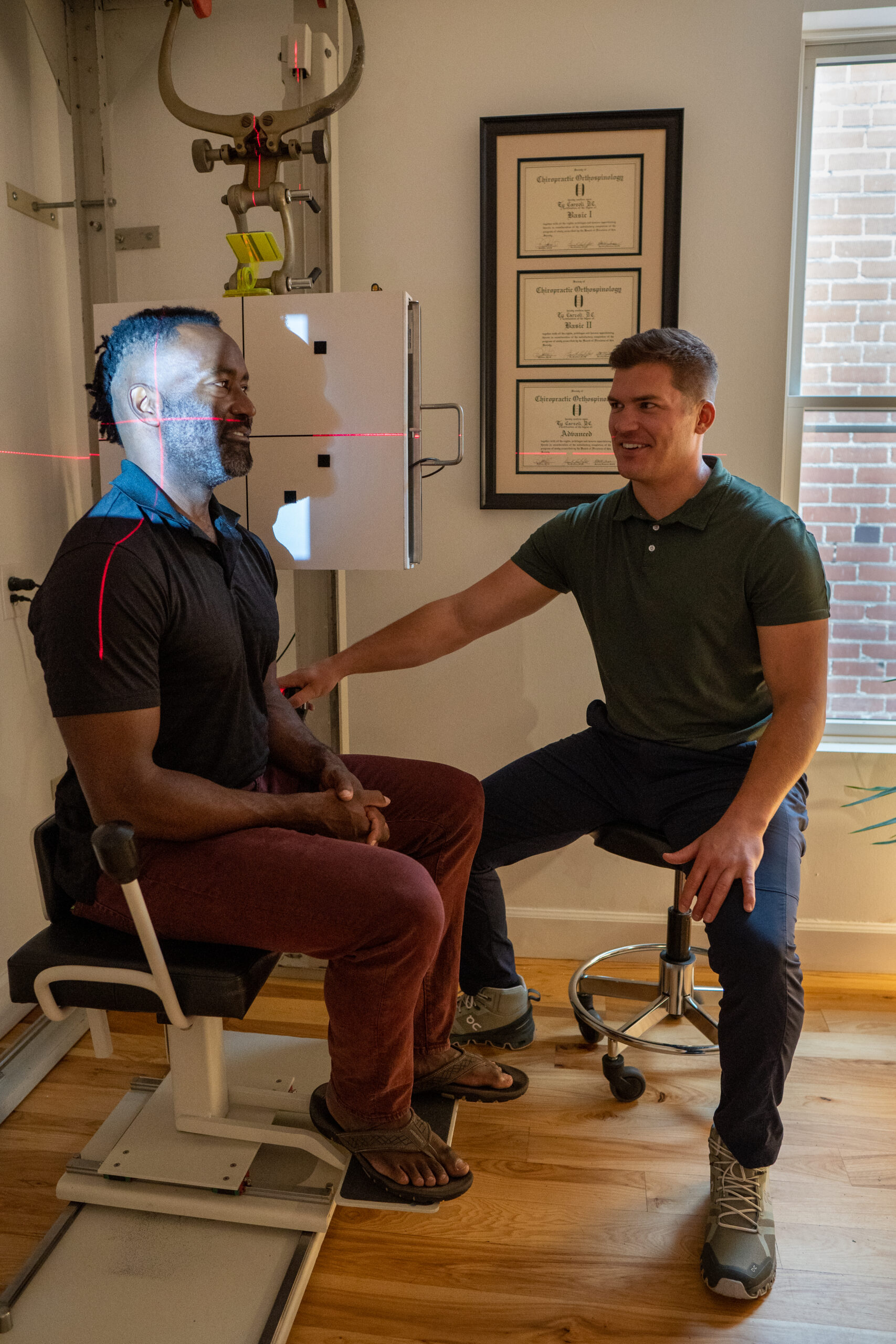

Understanding Migraines and Tension Headaches
Headaches are not all the same. Different headache types have different causes, symptoms, and treatment approaches.
Tension Headaches
Tension headaches are the most common type of headache experienced by adults.
Typical symptoms include:
- A dull, aching pain
- Pressure around the forehead
- Tightness in the scalp or neck muscles
- Shoulder tension
- Mild to moderate pain
- Symptoms that worsen after prolonged sitting or stress
Muscle tightness, poor posture, stress, and neck strain are common contributing factors.
Migraines
Migraines are a neurological condition that involves much more than head pain.
Symptoms may include:
- Moderate to severe headache
- Throbbing or pulsating pain
- Nausea or vomiting
- Sensitivity to light
- Sensitivity to sound
- Visual disturbances (aura)
- Dizziness
Migraines have complex causes involving genetics, neurological activity, hormones, environmental triggers, and lifestyle factors. Chiropractic care is not intended to treat the underlying neurological condition, but some patients seek care to address accompanying neck pain or movement restrictions that may coexist with migraines.
Cervicogenic Headaches
Another type of headache, called a cervicogenic headache, originates from structures within the neck.
Common characteristics include:
- Pain beginning at the base of the skull
- Neck stiffness
- One-sided headache
- Pain triggered by neck movement
- Limited range of motion
Because these headaches are associated with dysfunction in the cervical spine, they may respond differently than primary headaches such as migraines.
Can Neck Dysfunction Contribute to Headaches?
For some people, yes.
The muscles and joints of the upper neck share neurological connections with structures involved in head pain. This relationship helps explain why certain neck conditions can refer pain into the head.
Potential contributing factors include:
- Poor posture
- Whiplash injuries
- Muscle tension
- Joint dysfunction
- Repetitive workplace strain
- Sports injuries
- Limited cervical mobility
A thorough evaluation is necessary to determine whether neck dysfunction may be contributing to an individual’s symptoms.
Potential Benefits of Upper Cervical Chiropractic Care for Headache Patients
Every patient’s experience is different, and outcomes vary depending on the underlying cause of the headache.
When headaches are associated with neck dysfunction, upper cervical care may help support:
Improved Neck Mobility
Restoring normal joint movement may reduce stiffness and improve everyday comfort.
Reduced Muscle Tension
When cervical joints move more efficiently, surrounding muscles may experience less strain.
Reduced muscle tension may help decrease one of the factors associated with tension headaches.
Better Posture
Forward head posture places additional stress on the upper cervical spine.
Upper cervical care is often combined with posture education and ergonomic recommendations to support long-term spinal health.
Conservative, Drug-Free Care
Many patients appreciate that upper cervical chiropractic care is a conservative treatment option that does not rely on surgery or medication.
For some individuals, it may complement other treatments recommended by their primary care physician or neurologist.
Some people may also experience radiating symptoms into the arm if nerves become irritated. Persistent numbness, weakness, or severe neurological symptoms should always be evaluated promptly by a medical professional.
How Upper Cervical Adjustments Work
Upper cervical chiropractic care differs from traditional chiropractic treatment by focusing specifically on the atlas and axis.
Rather than performing generalized spinal adjustments, upper cervical chiropractors use detailed assessments that may include:
- Comprehensive health history
- Physical examination
- Posture analysis
- Neurological screening when appropriate
- Digital X-rays or review of existing imaging if clinically indicated
Based on these findings, they determine whether gentle, highly specific upper cervical adjustments may be appropriate.
Many patients are surprised to learn that upper cervical adjustments typically involve very little force and often do not involve twisting or cracking of the neck.
Common Headache Triggers Seen in Denver Patients
People living throughout the Denver metro area often experience headache triggers related to work, recreation, and lifestyle.
Examples include:
Long Hours at a Computer
Desk jobs often encourage poor posture and prolonged muscle tension.
Skiing and Snowboarding Injuries
Colorado’s active lifestyle increases the risk of falls and whiplash-type injuries.
Auto Accidents
Even minor vehicle collisions can affect the muscles and joints of the neck.
Stress
Busy schedules, work demands, and family responsibilities frequently contribute to muscle tension.
Poor Sleep Position
Sleeping without proper neck support may increase morning stiffness and headache frequency.
When Should You Visit an Upper Cervical Chiropractor?
You may benefit from a professional evaluation if you experience:
- Frequent tension headaches
- Chronic neck pain with headaches
- Headaches following a car accident
- Pain beginning at the base of the skull
- Limited neck movement
- Persistent muscle tightness
- Recurring headaches despite self-care
Residents across Denver, Lakewood, Littleton, Aurora, Arvada, Centennial, Westminster, Englewood, and surrounding communities often seek upper cervical evaluations when conservative treatments have not provided lasting improvement.
Lifestyle Tips That May Help Reduce Headaches
In addition to professional care, healthy habits may help reduce headache frequency.
Consider:
- Improving workstation ergonomics
- Taking movement breaks every 30–60 minutes
- Staying hydrated
- Managing stress through relaxation techniques
- Exercising regularly
- Getting adequate sleep
- Performing neck and shoulder stretches recommended by a healthcare professional
What to Expect During Your First Appointment
A quality upper cervical chiropractor begins with a comprehensive evaluation rather than immediately recommending treatment.
Your visit may include:
- Review of medical history
- Discussion of headache patterns
- Physical examination
- Posture assessment
- Neurological screening when appropriate
- Imaging if clinically indicated
- Explanation of findings
- Individualized care recommendations
If upper cervical care is not appropriate, your chiropractor should recommend referral to another healthcare provider when necessary.
Frequently Asked Questions
Can upper cervical adjustments cure migraines?
No. Migraines are a complex neurological condition, and chiropractic care should not be presented as a cure. However, some individuals seek upper cervical chiropractic care to address accompanying neck pain or movement dysfunction that may be associated with their symptoms as part of a broader treatment plan.
Can chiropractic care help tension headaches?
For some people, tension headaches are associated with muscle tightness, posture, or neck dysfunction. An evaluation can help determine whether upper cervical chiropractic care may be an appropriate conservative option.
Are upper cervical adjustments safe?
Upper cervical techniques are designed to be gentle and specific. Before recommending treatment, a qualified chiropractor should perform a detailed examination to determine whether this approach is appropriate for your condition.
How many visits will I need?
Treatment plans vary depending on the individual’s symptoms, health history, examination findings, and response to care. There is no standard number of visits that applies to every patient.
Find an Upper Cervical Chiropractor in Denver
If recurring headaches are affecting your quality of life, identifying potential contributing factors is an important first step. For individuals experiencing headaches alongside neck pain, stiffness, or reduced mobility, an upper cervical evaluation may help determine whether dysfunction in the upper neck is involved.
An experienced upper cervical chiropractor in Denver can perform a comprehensive assessment, review your medical history, and develop a personalized care plan based on your specific needs. Whether your symptoms began after a car accident, years of desk work, or an active Colorado lifestyle, conservative upper cervical care may be one option to explore as part of your overall healthcare strategy.
© 2026 Denver Upper Cervical Chiropractic